
Muneo-sukhoe (문어숙회)
A pair of tentacles from the Chinese grocery store for $6?
Then lets make muneo-sukhoe.
(A korean blanched octopus dish complimented with chogochujang, gireumjang, and a nice cold glass of beer.)
' begin '
I start with the defrosted octopus. Looks intimidating. I read cooking this wrong can make it rubbery and tough rather than tender.


Almost half a kilo for two tentacles. 16 grams of protein per 113 grams, very nice.
I transfer the slimy tentacles into a big enough bowl to begin the tenderizing and cleaning process.
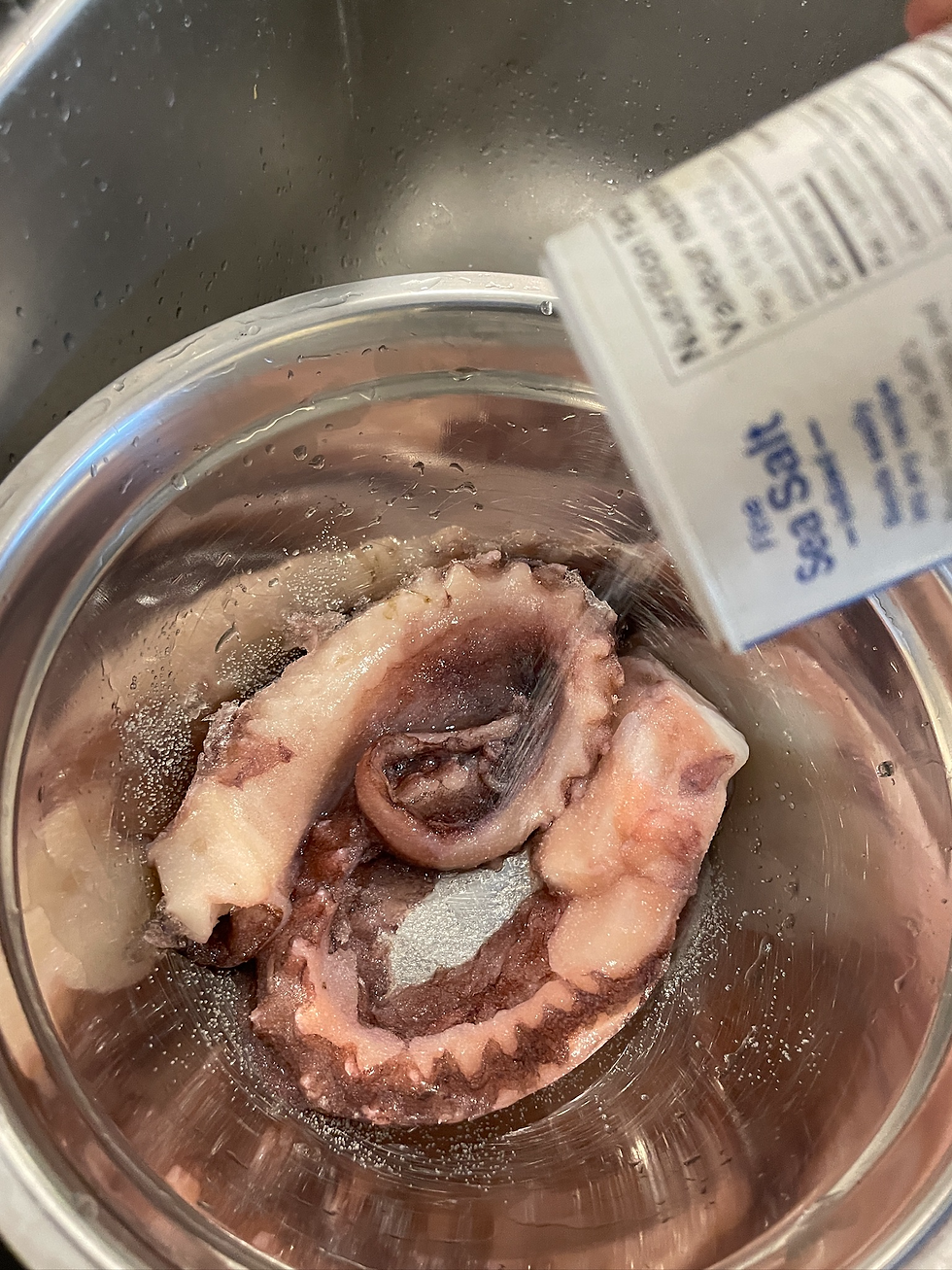
Using the salt, I massage the tentacles whilst cleaning them from their slime and any debris in their suckers. I note that defrosting the meat in the refrigerator made the tentacles burn my hand with coldness.
After massaging the salt into the tentacles, I rinse off the excess mucus and rinse the tentacles in cold water. Repeating this 3 more times.
There isn't a set number of times to repeat this as far as I know. I think that there was a noticeable difference in the firmness of the meat after a few massages.
When I did the first massage, I felt like I could have snapped the tentacle in half. That's how firm it was. However, after the third massage round the meat texture was soft, while still being able to provide feedback after poking it with a finger.
Apparently, there is another way to tell if the octopus is tender enough. Once you cleaned off all the slime it should be ready. However my tentacles were still slimy in some parts. I believe this can come down to the type of octopus and the freshness of the meat.
Anyways my massaging and cleaning technique looks strange so I digress.
Before I did any of this though I had a pot of water boiling on the stove.

So with the water boiling I slowly drop the tentacles.
At this point it looks more like a bone than a octopus tentacle. To be honest it didn't look anything like the photos or videos I saw on how to cook it.

At this stage though the timing matters a lot now. If I cook it too long it could turn very chewy and tough, but you still want it cooked enough obviously.
For me, I cooked the tentacles for 4 minutes total and then dunk them straight a bowl with cold water.
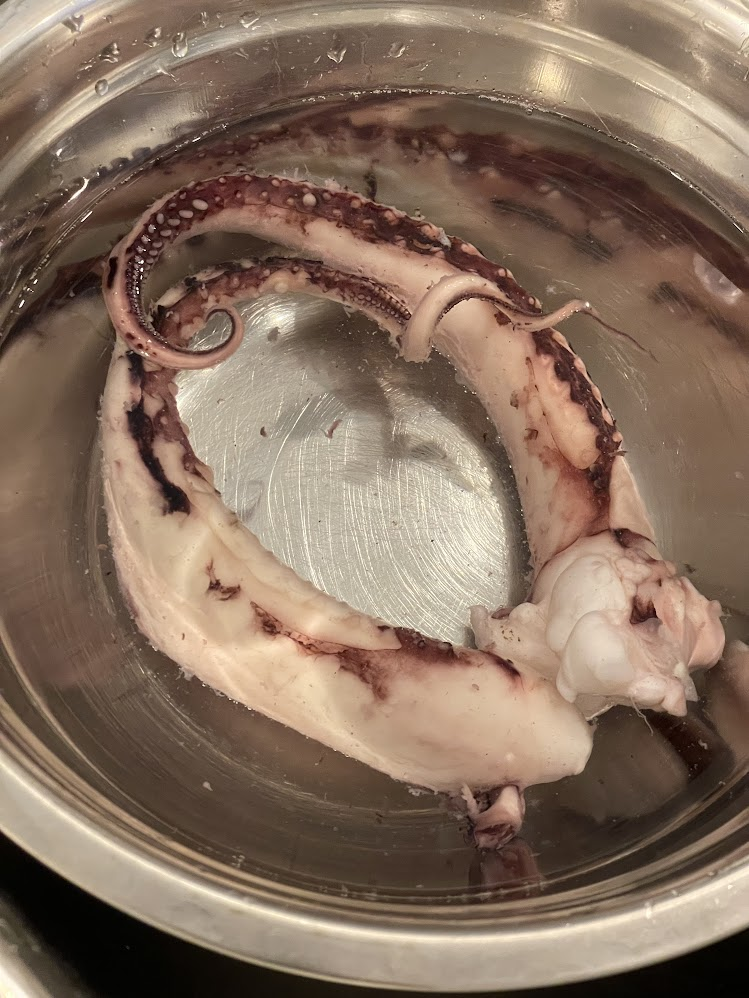
This is also important to do to prevent the octopus from cooking further and getting the juicy, snappy, and satisfying taste.
Now conveniently, while the tentacles rest and cool down, I can start making the dripping sauces.
There are two sauces that I decided to pair with the meat. Chogochujang and gireumjang.
Chogochujang is sweet, salty, and slightly spicy sauce. It's made with gochujang, vinegar, honey, and garlic. This is a typical sauce for many other blanched and raw seafood dishes.

Gireumjang is a simple savory mix of toasted sesame oil, a pinch of sea salt, and optionally some cracked black pepper. Supposedly it goes well being not too overpowering yet still providing a subtle umami nutty taste.

To make the sauces I followed these ratios,
Chogochujang
2 tbsp Gochujang (Korean chili paste)
1 tbsp Rice Vinegar
1 tbsp Sugar (or honey)
1 tsp Minced Garlic
Gireumjang
2 tbsp Sesame Oil
0.5 grams of salt
pinch of black pepper

Finally it's time to cut and plate the tentacles. Using my best knife skills, I attempt to slice longer thin pieces by cutting diagonally. All whilst keeping the cuts layered on each other.

Using the cuts I lay the slices into a spiral, putting the tapered end into three bits in the center.
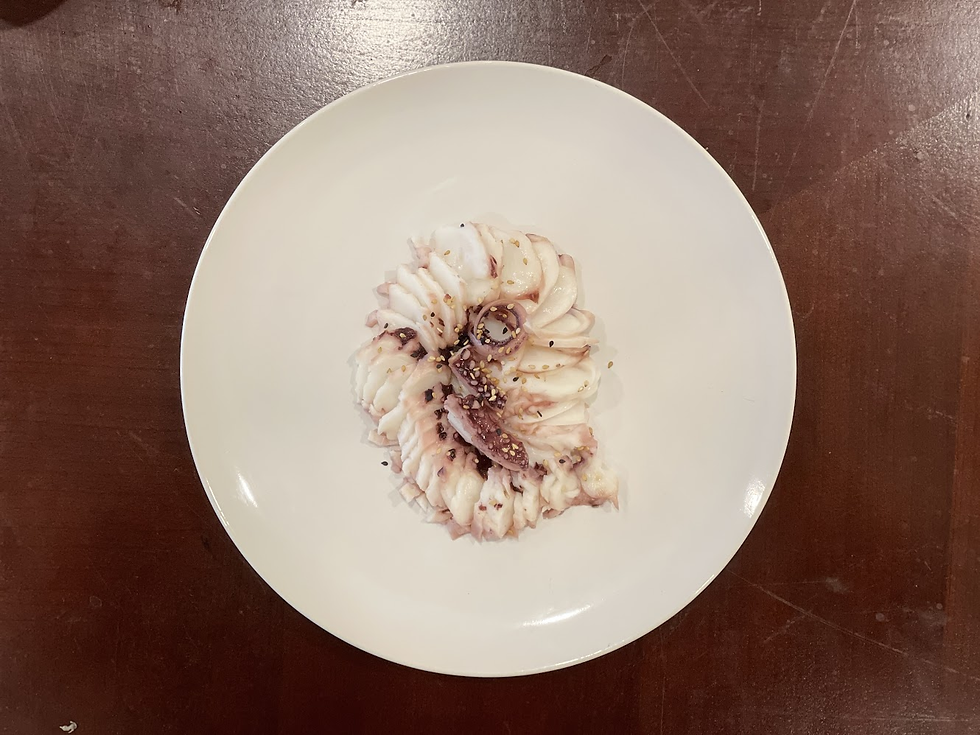
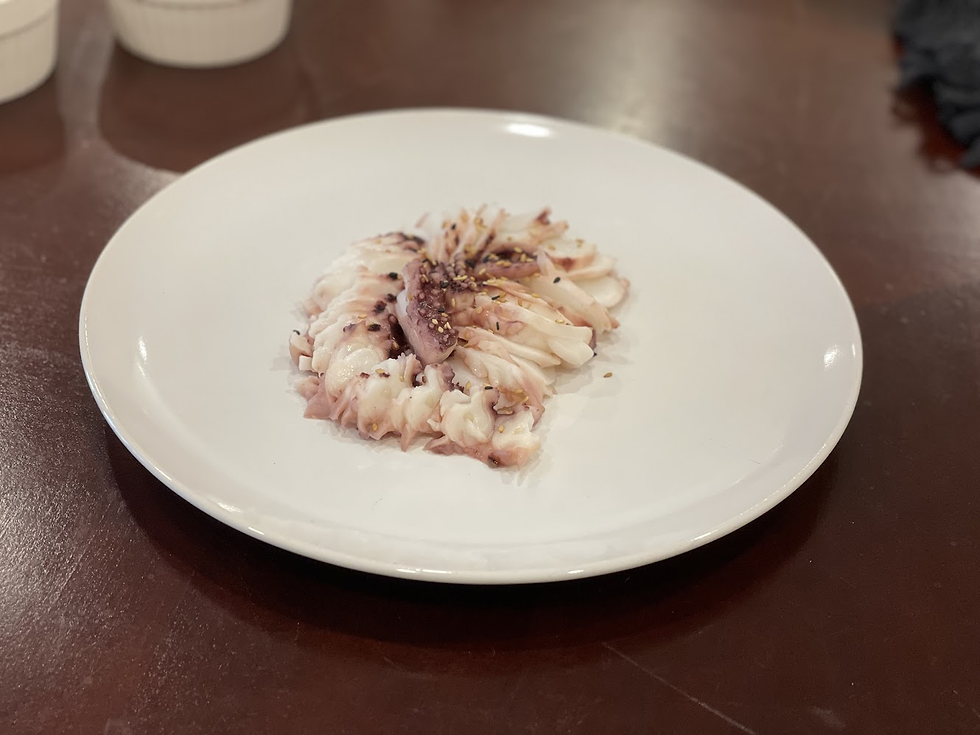

Can't forget the drink though, either beer or soju, but for today it's a beer. A can of Corona.

And for the taste, I think I cooked it decent for my first try.


:)


Comments